
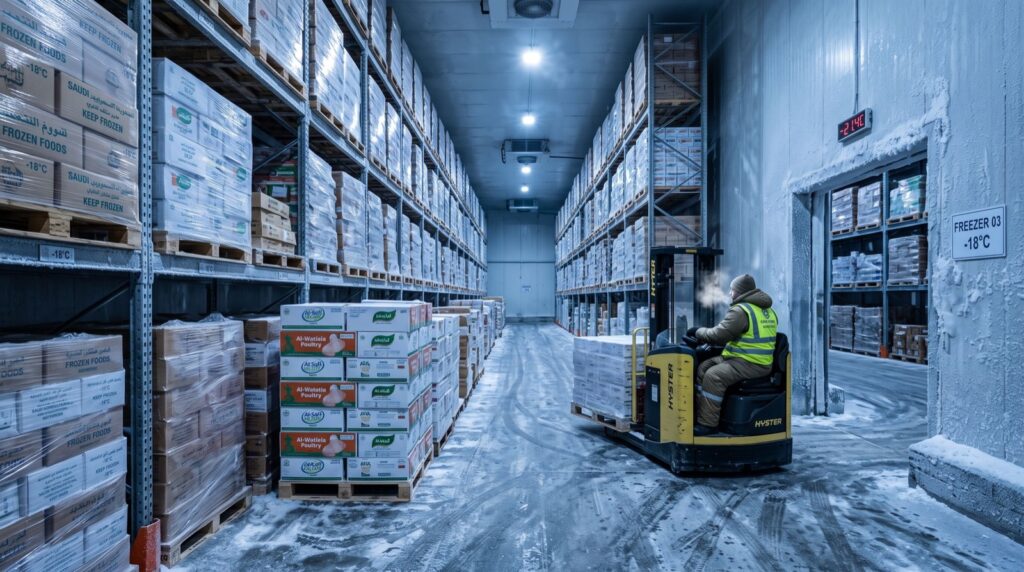
Chilled Storage in Saudi Arabia: A 2026 Guide for Temperature-Sensitive Goods
Chilled storage has quietly become one of the most important links in the Saudi supply chain. As grocery delivery, pharmacy fulfilment, and premium food imports scale across Riyadh and Jeddah, the difference between profit and spoilage often comes down to a few degrees Celsius. In 2026, businesses that treat temperature control as a strategy rather than an afterthought are the ones keeping products fresh and customers loyal.
This guide breaks down how chilled storage actually works, which goods depend on it, and how to pick a facility that protects your stock without draining your budget. I have walked through enough cold rooms to know that the details, from door seals to humidity logs, decide everything.
What Chilled Storage Means for Modern Supply Chains
Chilled storage keeps goods in a controlled band, usually between 0°C and 8°C, without freezing them. That range preserves texture, potency, and shelf life for products that would degrade at room temperature but suffer damage if frozen solid.
The concept sits at the heart of the wider cold chain, an unbroken sequence of refrigerated handling from producer to end user. When one link fails, even for twenty minutes on a loading dock, the whole chain loses value. That is why serious operators invest in monitoring, not just cooling.
Why the Cold Chain Cannot Be Skipped
The World Health Organization estimates that unsafe food causes roughly 600 million illnesses globally each year, and temperature abuse is a leading cause. You can read the detail in the WHO food safety fact sheet. For any Saudi business handling dairy, produce, or medicine, that risk is not abstract. It shows up as returns, recalls, and lost trust.
Which Products Depend on Chilled Storage
Not every item needs refrigeration, but a surprising range of high-value goods do. Getting a professional read on your inventory is the first step, and reputable facilities offer dedicated Chilled Storage zones tuned for exactly these categories.
- Fresh dairy, soft cheeses, and yoghurt
- Fruits, leafy greens, and cut vegetables
- Vaccines and temperature-sensitive medicines
- Chocolate, confectionery, and premium bakery items
- Certain cosmetics and skincare with active ingredients
Interestingly, the fashion sector is now a client too. High-end leather, natural fibres, and archival garments degrade in Saudi heat, so specialist providers even offer Storage for the Fashion Industry with stable temperature and humidity for valuable stock.
Chilled, Ambient, and Frozen Compared
Choosing the wrong storage tier wastes money or ruins goods. This table lays out the practical differences.
| Storage Type | Typical Range | Best For | Main Risk If Wrong |
|---|---|---|---|
| Chilled | 0°C to 8°C | Dairy, produce, medicine | Spoilage from warm spikes |
| Ambient | 15°C to 25°C | Canned goods, dry stock | Melting or heat damage |
| Frozen | -18°C or lower | Meat, seafood, ice cream | Texture loss if thawed |
How Do You Choose a Chilled Storage Provider?
Price matters, but reliability matters more. A cheaper unit that fails during a summer power cut can cost you an entire pallet. Work through these steps before you sign anything.
- Ask for temperature logs from the past ninety days to check stability.
- Confirm backup power, ideally automatic generators with fast switchover.
- Verify humidity control, since many products need moisture management too.
- Check access hours against your delivery and dispatch schedule.
- Review pest control and hygiene certification for food-grade zones.
When you shortlist candidates, lean toward quality service providers that publish their standards openly. Transparency about monitoring usually signals a well-run operation.
The Detail Most People Miss
Here is a practical tip from experience: pay attention to the loading bay, not just the cold room. Many temperature failures happen during transfer, when pallets sit in a hot dock while paperwork gets sorted. Facilities with sealed, refrigerated docks protect your goods during that vulnerable handoff. Ask to see the dock before you commit.
Costs and Efficiency in 2026
Energy remains the biggest line item in chilled storage, and Saudi Arabia’s push toward efficiency under Vision 2030 is reshaping how facilities operate. Modern sites use variable-speed compressors, thick insulation, and smart controls to cut waste.
For guidance on efficient refrigeration design, the U.S. Department of Energy offers well-tested principles that translate globally. As a client, you benefit indirectly: efficient facilities pass lower running costs into more stable pricing.
- Shared multi-tenant cold rooms lower entry cost for small brands.
- Pay-per-pallet models suit seasonal or fluctuating inventory.
- Long-term contracts often unlock better rates and priority access.
Monitoring: The Feature That Separates Good From Great
Cooling is only half the job. The other half is proving, minute by minute, that the temperature never strayed. Modern chilled facilities in Riyadh and Jeddah now treat data as a product feature, not paperwork.
Continuous sensors feed dashboards that alert staff the moment a reading drifts. For pharmaceutical and food clients, that audit trail is often a regulatory requirement, not a nicety. When a shipment is questioned, a clean temperature log settles the matter instantly.
What Good Monitoring Looks Like
- Wireless sensors placed at multiple heights, since cold air pools low
- Automatic alerts sent by SMS or app the moment a threshold is crossed
- Tamper-proof logs stored for the full storage period
- Regular calibration so readings stay trustworthy
- Redundant sensors, so one failure never blinds the system
A quick real-world example makes the point. During a Riyadh summer, a well-monitored facility caught a failing compressor at 2 a.m. because a sensor flagged a half-degree rise. Staff switched to backup cooling before any product warmed. Without that alert, a full room of dairy would have been lost by morning.
Planning for Seasonal Demand
Chilled storage needs peak during Ramadan, Hajj season, and summer, when both consumption and heat surge together. Smart operators plan capacity around these spikes rather than reacting to them.
If your business follows a seasonal rhythm, discuss flexible pallet allocation up front. Locking in guaranteed space before the rush prevents the scramble that leaves goods sitting warm on a dock because no cold room was free.
Frequently Asked Questions
What temperature counts as chilled storage?
Chilled storage generally holds products between 0°C and 8°C. This keeps items cold enough to slow spoilage and bacterial growth without freezing them, which would damage texture and cell structure in fresh produce and dairy.
How is chilled storage different from frozen storage?
Chilled storage keeps goods refrigerated but unfrozen, preserving fresh qualities for days or weeks. Frozen storage drops to -18°C or lower for months of preservation. Freezing a chilled-only product, such as fresh lettuce, ruins it.
Can chilled storage handle non-food items?
Yes. Pharmaceuticals, cosmetics with active ingredients, floral stock, and even luxury textiles benefit from controlled cool conditions. The key is matching the exact temperature and humidity to the product’s requirements.
Is chilled storage worth it for a small business?
Often, yes. Shared and pay-per-pallet options mean small brands can access professional refrigeration without building their own cold room. The cost of one spoiled shipment usually exceeds months of storage fees.
Final Thoughts
Chilled storage is no longer a niche concern in Saudi Arabia. It underpins food safety, medicine reliability, and even luxury goods protection across a fast-growing market. In 2026, the smart move is to treat temperature control as a core part of your operation, backed by a facility that proves its performance with data. Choose a provider that monitors closely, protects during transfers, and prices fairly, and your products will reach customers exactly as intended.